The Moon has influenced human life for thousands of years. From guiding ancient farmers to inspiring modern spiritual seekers, its quiet presence continues to shape our daily rhythms.
Today, lunar calculators make it easier than ever to track the moon’s changing phases. These tools help you know exactly where the moon is in its cycle, how old it is, and what energy each phase represents.
Many people rely on a lunar cycle calculator to plan gardening, manifesting rituals, moon journaling, fishing, and sleep schedules. Others simply enjoy knowing what the sky is doing behind the scenes.
No matter your reason, understanding the moon’s cycle brings a deeper connection to nature and a clearer sense of timing.
This detailed guide breaks everything down in simple language. You’ll learn what a lunar cycle calculator does, how lunar age works, and how you can use moon phases in your daily life. Whether you’re a beginner or a moon lover looking to expand your knowledge, this article gives you everything you need.
What is a Lunar Cycle Calculator?
A lunar cycle calculator is a digital tool that uses astronomical data to determine the moon’s current position, illumination, and phase for any date and time, past or future.
It’s essentially a sophisticated celestial calendar.
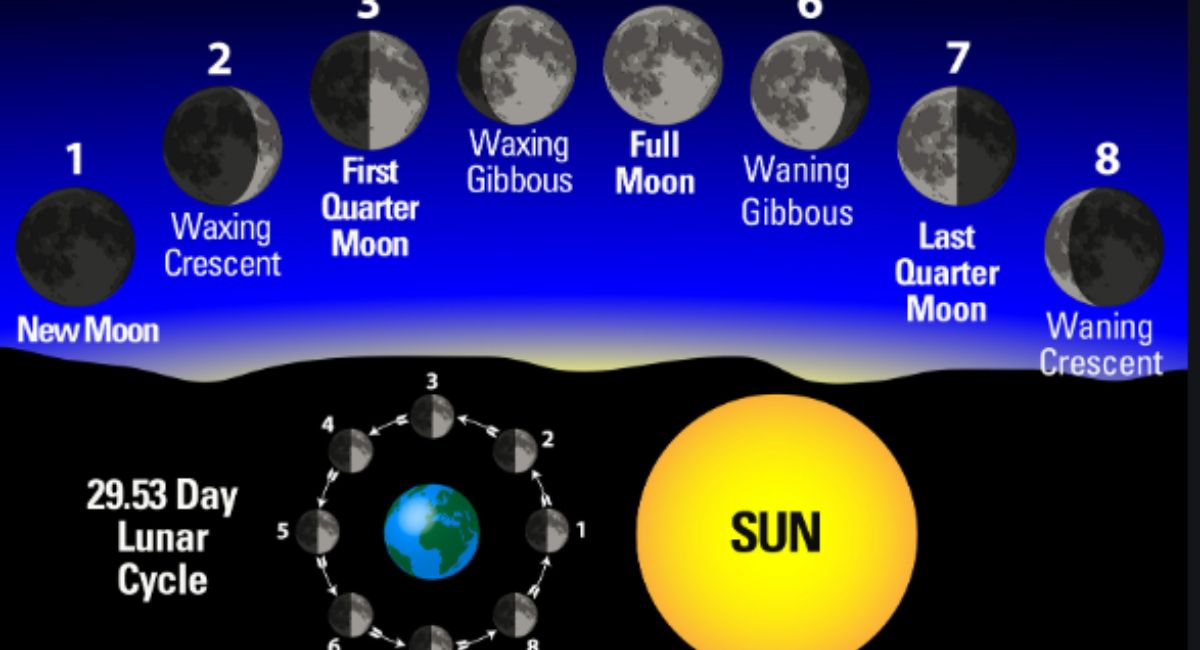
The full lunar cycle, from one New Moon to the next, is called a synodic month, which takes approximately 29.5 days (more precisely, 29 days, 12 hours, and 44 minutes). The calculator tracks this precise 29.5-day loop.
What Information Can a Lunar Cycle Calculator Provide?
A high-quality lunar cycle calculator offers a wealth of information beyond just the phase name. Key data points often include:
- Moon Phase: The current phase (e.g., Full Moon, Waxing Crescent).
- Illumination Percentage: The exact percentage of the moon’s face that is lit by the sun as viewed from Earth.
- Lunar Age: The number of days that have passed since the last New Moon (0-29.5 days).
- Moonrise and Moonset Times: The precise times the moon appears and disappears below the horizon for your location.
- Zodiac Position: The astrological sign the moon is currently transiting through.
Understanding the moon’s phase is essential because each stage carries a different energy, which many believe impacts moods, emotions, and activities.
Understanding the 8 Main Moon Phases
The Moon does not produce its own light; the phases we see are a result of the changing angles at which we view the Moon’s illuminated surface as it orbits Earth. The cycle is divided into eight primary phases, grouped into two main periods: waxing (growing brighter) and waning (shrinking darker).
The Waxing (Growing) Phases
The waxing period is associated with growth, intention setting, and building energy. This is the time when the light we see from the moon is increasing each night.
The Waning (Shrinking) Phases
The waning period is associated with release, gratitude, clearing, and wrapping things up. This is the time when the light we see from the moon is decreasing each night.
What is a Lunar Age Calculator?
A lunar age calculator is a feature within most lunar cycle calculators that provides a simple but powerful number: the moon’s age in days.
This age measures the number of days since the most recent New Moon. Since the full cycle takes about 29.5 days, the lunar age number will always be a number between 0 and 29.5.
- Lunar Age 0: Corresponds to the New Moon.
- Lunar Age 7-8: Corresponds to the First Quarter Moon.
- Lunar Age 14-15: Corresponds to the Full Moon.
- Lunar Age 22-23: Corresponds to the Last Quarter Moon.
Knowing the lunar age can simplify your tracking process. If you follow lunar gardening advice, for instance, you might see a recommendation to plant “during lunar ages 3-6,” which tells you exactly when to get to work without having to look up the phase name.
Why the Lunar Cycle Matters
The moon’s influence extends far beyond a pretty night sky. Its consistent, predictable rhythm affects Earth’s systems and, many believe, human behavior and intention.
The Moon and the Tides
The most well-known influence is on the tides. The moon’s gravity is the primary driver, causing the massive bulges of water that we call high and low tides.
The highest (spring) tides occur during the New and Full Moon when the Sun, Earth, and Moon align, combining their gravitational forces. The lowest (neap) tides occur during the First and Last Quarter Moons.
Moon Gardening and Agriculture
Historically, farmers have planted and harvested based on the moon. This practice, often called biodynamic gardening, suggests that:
- Waxing Moon: The increasing light encourages growth, making it ideal for planting crops that produce above-ground (leafy greens, fruits).
- Waning Moon: The energy is thought to shift to the roots, making it better for planting root vegetables (potatoes, carrots) and for pruning.
Personal Energy and Mood
While science is still exploring the connection, many people report feeling shifts in their mood and energy that align with the lunar cycle.
- Full Moon: Often associated with high energy, emotional intensity, and sometimes restlessness or poor sleep.
- New Moon: A time for quiet, rest, introspection, and low-energy activities.
Using a lunar cycle calculator to track your own moods alongside the phases can help you identify personal patterns and plan your rest and activities accordingly.
How to Use a Lunar Cycle Calculator
Using these tools is straightforward, but knowing the advanced features helps you get the most out of them.
Step 1: Input Your Location and Date
Most calculators start by asking for your geographic location (city, state, or ZIP code). This is crucial because moonrise and moonset times, as well as the exact moment a phase begins, are location-dependent.
You must then enter the date you wish to calculate for. Many users check today’s date, but you can also look up a date from the past or future.
Step 2: Interpret the Results
Once you hit “Calculate,” the tool will provide a visual diagram of the moon’s shape and the full data set.
- Phase Name: Use the phase descriptions to understand the energy of this phase.
- Illumination: A number close to 100% means a Full Moon, and a number close to 0% means a New Moon.
- Lunar Age: Use this to determine where you are in the 29.5-day cycle.
Step 3: Apply the Information
This is the most important step: taking the data and using it for practical or spiritual benefit.
- For Planning: If you’re a writer, schedule creative brainstorming (New Moon) and final editing (Full Moon).
- For Personal Growth: Use the Waxing Moon for starting new habits and the Waning Moon for breaking old ones.
- For Astronomy: Use the moonrise and moonset times to know the best time to step outside and observe the specific phase.
Lunar Age Calculator and Personal Astrology
For those interested in astrology, the concept of a Natal Moon Phase or Birth Moon Phase is popular. This is the exact moon phase the sky was in on the day you were born.
You can use a lunar phases calculator to find the phase of your birthdate. Many believe that this phase reveals key insights into your core personality, emotional needs, and how you instinctively react to the world.
For example, someone born under a New Moon is often seen as an “initiator” or a person driven by internal visions and new ideas. Someone born under a Full Moon is often considered expressive, relationship-focused, and someone whose energy is fully “out there.”
Finding your Natal Moon Phase is a fascinating way to connect your personal history with the celestial cycles.
Discover our Custom Moon Phase Posters
Our custom moon phase posters are a beautiful way to turn your personal lunar moment into artwork. Many people love printing the moon phase from their birthday, wedding day, or the night their child was born. These posters are designed to match your chosen date and display the exact phase the moon was in on that special moment.
Moon phase posters are also excellent gifts. They combine astronomy with personal history, making them meaningful displays for homes, offices, and studios. By pairing a lunar cycle calculator with a custom poster design, you can transform a simple date into a timeless piece of art.
The posters usually show the illuminated shape of the moon along with the matching phase name. Some designs also include moonrise and moonset times, lunar age, and the zodiac position of the moon on that date. This adds deeper detail and allows you to visually connect with your chosen moment.
Whether you’re celebrating a milestone or simply love astronomy, custom moon posters help you capture the beauty of the lunar cycle in a unique way. Many people keep them as reminders of the phases that shaped their lives.
Discover our Custom Moon Phase Posters
If you love meaningful designs, our custom moon phase posters offer another chance to express your connection with the lunar calendar. They are created with clean spacing, modern fonts, and a minimalist layout that highlights the moon’s shape without distractions.
You can choose a specific date, such as an anniversary, graduation, or the day your journey began. The poster adapts to your chosen day and displays the precise lunar phase. Each phase tells a different story, and displaying it in your space adds personal significance.
Many people use these posters as decorative pieces. They fit beautifully in bedrooms, living rooms, and creative spaces. The moon’s cycles naturally bring a calming energy, which makes these posters ideal for places where you want peace and balance.
When paired with a lunar cycle calculator, these posters help you understand your special date even more. You might learn that your birthday moon was a Waxing Gibbous or that your wedding moon was a New Moon. These details can enrich your personal connection to that moment.
High Paying Remote Jobs for College Students
College students today look for flexible remote jobs that allow them to earn well without disrupting their studies. If you’re someone who loves working from home while keeping your time free for assignments and exams, several high paying remote options can work for you.
Freelance writing is one of the best choices. Many companies hire students to create blog posts, product descriptions, and social media content. If you enjoy explaining ideas or telling stories, writing can become a reliable income source.
Virtual assistance is another opportunity. Businesses constantly need help with email management, scheduling, and reading documents. As long as you can stay organized, this job pays well and offers flexible working hours.
Online tutoring is also a strong option. If you’re skilled in math, English, or science, many platforms allow you to tutor students from all over the world. This not only helps you earn money but also strengthens your own understanding of the subject.
Graphic design and web development are excellent choices for students with creative or technical skills. Even beginners can start with small gigs and slowly build a strong portfolio. Digital skills continue to be in high demand, making these jobs ideal for students planning long term careers.
Lunar Phases Calculator and Astronomical Events
A lunar phases calculator is an invaluable tool for dedicated sky-watchers and amateur astronomers. It helps pinpoint not just the eight main phases, but also special events like eclipses and supermoons.
Understanding Eclipses
The moon is central to both solar and lunar eclipses.
- Solar Eclipse: Occurs only during the New Moon when the Moon passes directly between the Sun and Earth, blocking the Sun’s light.
- Lunar Eclipse: Occurs only during the Full Moon when the Earth passes directly between the Sun and Moon, casting a shadow on the Moon.
A good lunar cycle calculator can predict the exact dates of these rare events years in advance.
Supermoons and Micromoons
.
- Supermoon: Occurs when a Full Moon coincides with the Moon being at its closest point to Earth (perigee). It appears slightly larger and brighter.
- Micromoon happens when a full moon occurs while the moon is at its farthest distance from Earth, also known as apogee. Because it is farther away, it looks slightly smaller than a regular full moon.
Tracking these perigee and apogee points with a calculator helps astronomers and enthusiasts prepare to view the most spectacular Full Moons of the year.
Beyond the Eight: Other Moon Types
While the eight phases define the cycle, there are other common names and concepts used to describe the Full Moon, usually based on the month or season they appear in.
- Blue Moon: This name is used in two ways. The most common modern definition is the second Full Moon to occur within a single calendar month.
- Harvest Moon: The Full Moon that occurs closest to the autumnal equinox (usually in September or October).
- Hunter’s Moon: The Full Moon immediately following the Harvest Moon.
- Blood Moon: A non-scientific but dramatic name for the reddish appearance of the Moon during a total lunar eclipse.
A lunar cycle calculator or a lunar phases calculator will always show the astronomical phase (Full Moon) but can also be used to confirm the date and time of these traditional, named Full Moons.
Actionable Takeaways for Using Your Calculator
Ready to put your knowledge into practice? Here are four practical, actionable ways to use your lunar cycle calculator today:
- Plan Your Biggest Goals: Check the date of the next New Moon. Use the week leading up to it to brainstorm your next big goal. Start actively working on the goal during the Waxing Crescent phase for a major boost of building energy.
- Schedule Time for Release: Look up the date of the next Full Moon. Use the three days following this phase (the start of the Waning Gibbous) to journal, clean your space, or consciously let go of stress or bad habits.
- Optimize Your Sleep: If you find yourself sleeping restlessly, check the calculator to see if it aligns with the days surrounding the Full Moon. If it does, plan a calming routine (meditation, light reading) for those nights to counteract the high energy.
- Connect with a Loved One: Look up the moon phase for a significant date in a loved one’s life (a birthday or anniversary) and share that fact with them. It’s a unique, personal way to connect using astronomy.
Lunar Cycle Data Table
This table summarizes key characteristics of the cycle as tracked by a lunar cycle calculator.
| Phase Name | Illumination Range | Lunar Age Range (Days) | Key Action Word | Visibility Window |
| New Moon | 0% | 0 to 0.5 | Initiate | Not Visible |
| Waxing Crescent | 0.1% to 49.9% | 0.5 to 7.4 | Intend | Afternoon/Evening |
| First Quarter | 50% | 7.5 to 11.0 | Act | Afternoon to Midnight |
| Waxing Gibbous | 50.1% to 99.9% | 11.1 to 14.5 | Refine | Afternoon/Late Evening |
| Full Moon | 100% | 14.6 to 15.5 | Culminate | All Night |
| Waning Gibbous | 99.9% to 50.1% | 15.6 to 22.1 | Release | Late Night/Morning |
| Last Quarter | 50% | 22.2 to 25.7 | Evaluate | Midnight to Morning |
| Waning Crescent | 49.9% to 0.1% | 25.8 to 29.5 | Rest | Morning/Early Afternoon |
Conclusion
The lunar cycle calculator is a powerful, modern tool that bridges ancient wisdom with modern technology. It gives you instant access to the precise movements of the moon, transforming your relationship with the night sky.
By using the calculator to find the lunar age, track the lunar phases, and plan your activities, you are choosing to live in closer harmony with the universe’s oldest, most predictable rhythm.
Whether you’re planning a garden, setting an intention, or simply preparing to gaze at a spectacular Full Moon, the lunar cycle calculator is your reliable guide to all things celestial. Start using yours today to unlock the power of the moon’s rhythm in your life.
How long does a lunar cycle last?
A lunar cycle, or synodic month, lasts approximately 29.5 days. It begins with the New Moon and ends when the New Moon occurs again.
What is the difference between a lunar cycle calculator and a moon phases calculator?
The terms are often used interchangeably. Generally, a lunar cycle calculator emphasizes the full 29.5-day cycle and often includes the lunar age, while a moon phases calculator focuses primarily on the eight distinct phases and the illumination percentage. They both rely on the same core astronomical data.
Can a lunar cycle calculator predict my mood?
No, a lunar cycle calculator provides astronomical data, not psychological predictions. However, you can use the data to track your own emotional or sleep patterns against the phases over time. Many people report feeling higher energy during the Full Moon and lower energy during the New Moon.
How accurate are these calculators?
They are extremely accurate. Modern lunar cycle calculators use precise, scientifically-validated formulas based on the gravitational mechanics of the Earth, Moon, and Sun, and are often accurate to the minute for events like the exact time of the Full Moon.