What Is a Lunar Eclipse?
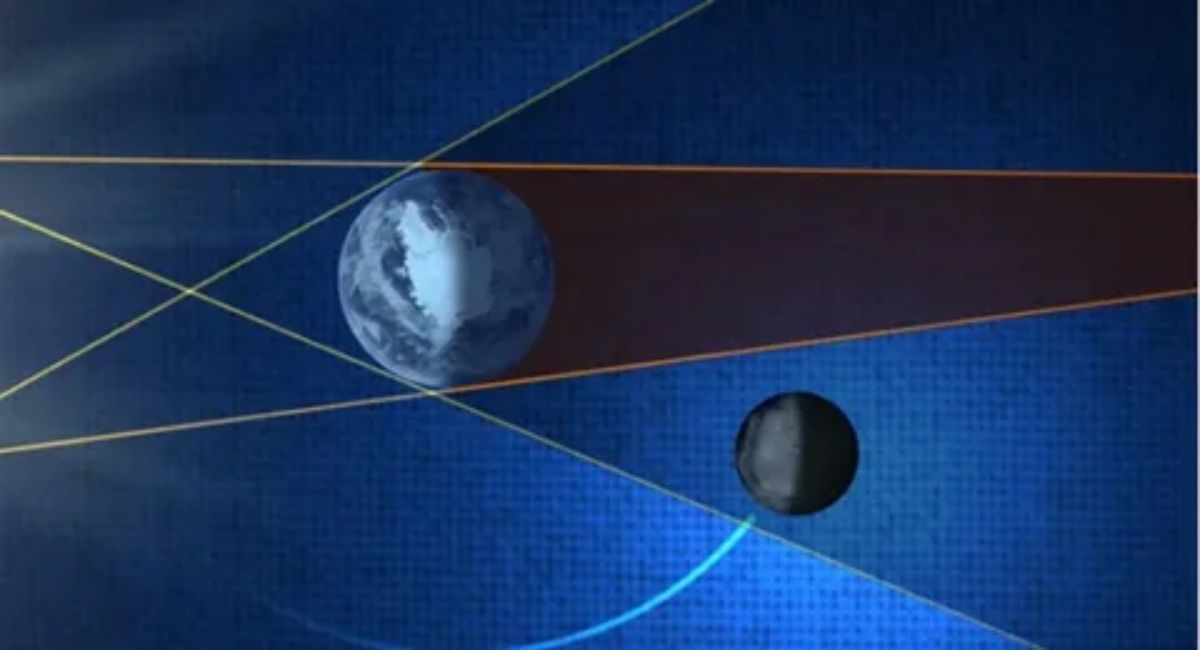
A lunar eclipse takes place when the Earth moves directly between the Sun and the Moon. When this alignment happens, the Earth blocks the sunlight that normally shines on the Moon. As a result, the Moon becomes darker and may even appear red for a short period of time.
A lunar eclipse can only occur during a full moon. For it to happen, the Sun, Earth, and Moon must line up almost perfectly in a straight line. When this alignment is correct, the Earth casts its shadow onto the Moon.
The Earth’s shadow has two sections:
Penumbra – the lighter outer shadow
Umbra – the darker inner shadow
As the Moon passes through these shadow regions, different types of lunar eclipses occur.
Even though there is a full moon every month, we do not see a lunar eclipse monthly. This is because the Moon’s orbit is slightly tilted. Only when everything aligns correctly do we witness a lunar eclipse.
How Does a Lunar Eclipse Happen?
The Earth revolves around the Sun, and the Moon revolves around the Earth. A lunar eclipse occurs when Earth comes directly between the Sun and the Moon, blocking the sunlight that would normally reflect off the Moon’s surface.
When the Moon enters Earth’s shadow:
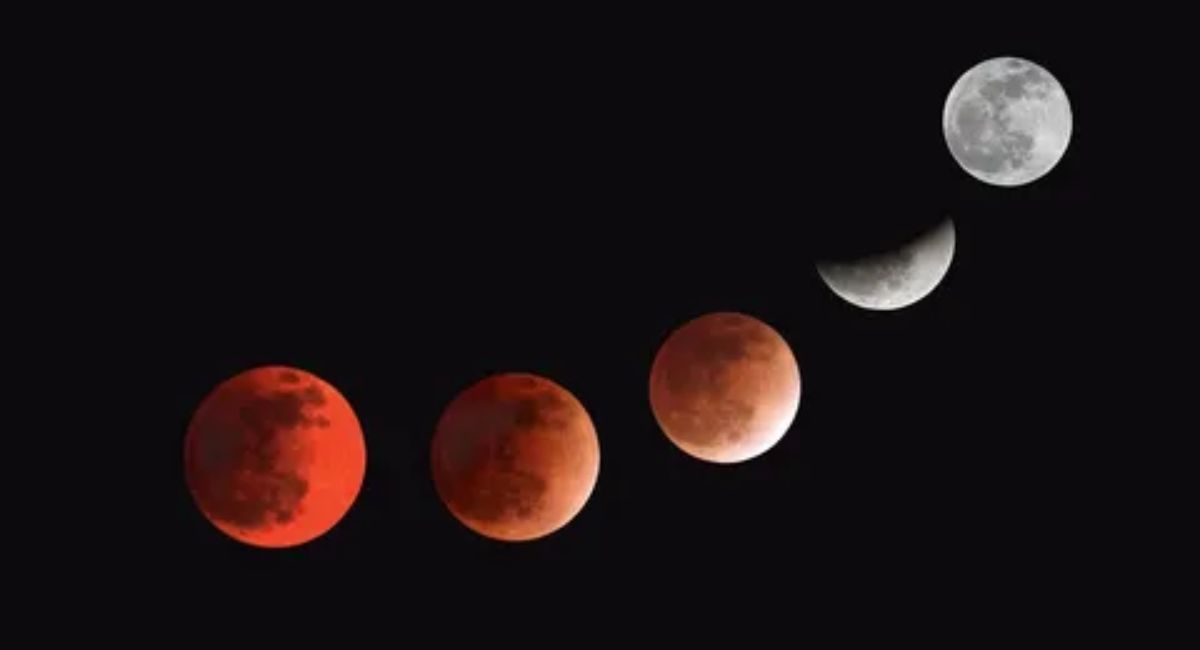
If it moves completely into the umbra, a total lunar eclipse occurs.
If only part of the Moon enters the umbra, it becomes a partial lunar eclipse.
If the Moon passes only through the penumbra, it is called a penumbral lunar eclipse.
A lunar eclipse can last several hours from start to finish. The total phase, when the Moon is fully inside the umbra, usually lasts less than two hours.
Unlike a solar eclipse, a lunar eclipse is completely safe to observe with the naked eye. No special glasses are required.
Types of Lunar Eclipses
There are three main kinds of lunar eclipses, depending on how the Moon moves through Earth’s shadow.
Total Lunar Eclipse
The Moon is entirely inside the umbra. This type creates the most dramatic and beautiful view, often turning the Moon red.
Partial Lunar Eclipse
Only a portion of the Moon enters the umbra. It may look like a dark shadow or “bite” is covering part of the Moon.
Penumbral Lunar Eclipse
The Moon passes through the lighter penumbra only. The dimming is subtle and sometimes difficult to notice.
Each type offers a unique viewing experience, but total lunar eclipses are usually the most impressive.
Why Does the Moon Turn Red?
During a total lunar eclipse, the Moon often appears red or copper-colored. This event is sometimes called a Blood Moon.
The red color happens because of Earth’s atmosphere. When sunlight passes through the atmosphere, shorter blue wavelengths scatter in different directions. The longer red and orange wavelengths bend and continue traveling through the atmosphere.
This red light reaches the Moon even though Earth blocks direct sunlight. The Moon then reflects this reddish light back toward us.
This effect is similar to the colors we see during sunrise and sunset. The exact shade of red can vary depending on dust, clouds, and pollution in Earth’s atmosphere.
How Often Do Lunar Eclipses Occur?
Lunar eclipses do not happen every month because the Moon’s orbit is tilted about five degrees compared to Earth’s orbit around the Sun. Due to this tilt, the Moon usually misses Earth’s shadow.
On average, there are about two to four lunar eclipses each year worldwide. However, not all of them are total eclipses. Many are partial or penumbral.
At any specific location, a total lunar eclipse may be visible once every two to three years. Astronomers can accurately predict lunar eclipses years in advance using mathematical calculations and computer models.
Lunar Eclipse vs. Solar Eclipse
Although both events involve the Sun, Earth, and Moon, they occur in opposite ways.
Lunar Eclipse
Happens during a full moon
Safe to view without eye protection
Can last for several hours
Visible from the entire night side of Earth
Solar Eclipse
Moon is between the Sun and the Earth
Happens during a new moon
Requires protective eyewear
Usually lasts only a few minutes
Visible only from a limited area
A lunar eclipse is generally easier to observe because it can be seen from a large portion of the Earth at night.
Best Way to Watch a Lunar Eclipse
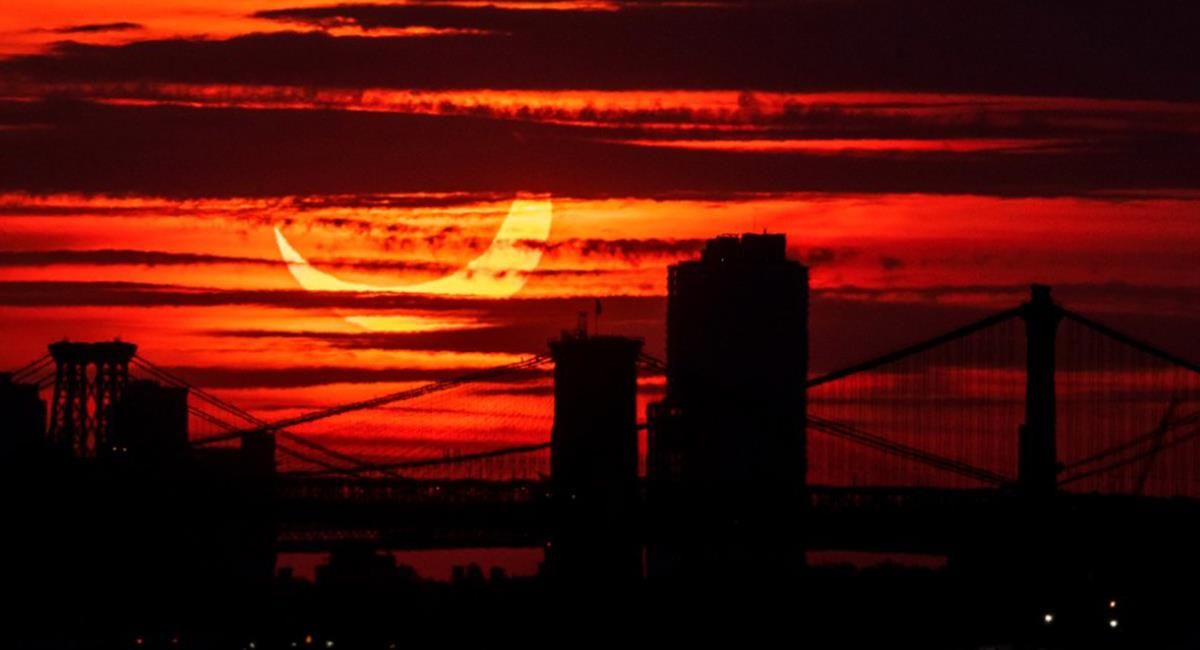
Watching a Lunar Eclipse is simple and fun. You do not need special equipment. You can watch it with your eyes. Binoculars or a telescope can give you a closer view, but they are not required.
Choose a place with a clear sky. Stay away from city lights if possible. Light pollution can reduce visibility. Check the exact time of the Lunar Eclipse in your area. The event can last several hours, so you have plenty of time to observe it.
Try to arrive early. Watch how the Moon slowly darkens. Notice the change in color during a total Lunar Eclipse. Take photos if you like. A camera with a tripod can help you capture clear images.
A Lunar Eclipse makes a great opportunity to learn about space. Families and friends often gather to enjoy this beautiful event together.
Myths and Beliefs About Lunar Eclipse
Throughout history, people created many myths about the Lunar Eclipse. In ancient times, people did not understand the science behind it. They often felt fear when the Moon suddenly darkened.
Some cultures believed that a dragon or monster was eating the Moon during a Lunar Eclipse. Others thought it was a sign of bad luck or disaster. In some traditions, people stayed indoors during a Lunar Eclipse because they feared harmful effects.
Today, science explains the true reason behind a Lunar Eclipse. We know it happens because of the Earth’s shadow. Still, these old stories remain part of human culture. They show how curious people have always been about the sky. A Lunar Eclipse continues to inspire both science and imagination.
Scientific Importance of Lunar Eclipse
A Lunar Eclipse helps scientists study the Earth and the Moon. During a total Lunar Eclipse, scientists can examine how the Earth’s atmosphere bends light. This helps them understand air pollution and dust levels.
Astronomers also study the Moon’s surface during a Lunar Eclipse. The changing light reveals details about craters and mountains. It helps experts learn more about lunar soil and temperature changes.
A Lunar Eclipse also teaches students about space movements. It clearly shows how the Earth, Moon, and Sun interact. Teachers often use a Lunar Eclipse as a live example of astronomy lessons.
Space agencies track every Lunar Eclipse carefully. They use it to test models of planetary motion. This improves future predictions and space research.
The Lunar Eclipse remains one of the best natural events for learning about our solar system.
Famous Lunar Eclipse Events in History
Many famous Lunar Eclipse events have taken place throughout history. Ancient records from China and Babylon describe Lunar Eclipse events thousands of years ago. These early observations helped people understand patterns in the sky.
One well-known Lunar Eclipse occurred in 1968. Astronauts on the Apollo 8 mission watched it from space. They saw the Earth blocking sunlight from the Moon while orbiting above it. This gave scientists a new view of a Lunar Eclipse.
In recent years, several “Super Blood Moon” events gained attention. These events combined a total Lunar Eclipse with a supermoon.Each Lunar Eclipse creates memories for people around the world. Photographers, astronomers, and sky lovers all look forward to these special nights.
Upcoming Lunar Eclipse and How to Prepare
Astronomers publish Lunar Eclipse dates many years ahead. You can check trusted space websites to find the next Lunar Eclipse in your region. Mark the date on your calendar.
Prepare by checking the weather forecast. Clear skies give the best view. Find an open area with a wide view of the sky. Bring a blanket or chair for comfort.
Learn the stages of a Lunar Eclipse so you understand what you are seeing. Watching the Moon slowly move into the Earth’s shadow feels exciting and peaceful at the same time.
A Lunar Eclipse connects us to the universe. It reminds us that we live on a moving planet in a vast solar system.
FAQs About Lunar Eclipse
Is it safe to watch a Lunar Eclipse with naked eyes?
Yes, it is completely safe to watch a Lunar Eclipse without any eye protection. The Moon only reflects sunlight, so it does not harm your eyes.
How long does a Lunar Eclipse last?
A Lunar Eclipse can last several hours from start to finish. The total phase usually lasts less than two hours.
Why does a Lunar Eclipse not happen every month?
A Lunar Eclipse does not happen every month because the Moon’s orbit tilts slightly. Most full moons miss the Earth’s shadow.
Can everyone see the same Lunar Eclipse?
People on the night side of the Earth can see the same Lunar Eclipse. However, visibility depends on weather and location.